

Nature-Based Solutions
Nature-based solutions are ways we can solve environmental and community challenges using natural systems and the world around us.
Instead of relying solely on human-made infrastructure, such as concrete walls, pipes, or drainage systems, nature-based solutions work with natural systems such as forests, wetlands, rivers, soils, and plants for a better outcome for all.
They can help communities become healthier, safer, and more resilient while simultaneously supporting surrounding wildlife and ecosystems.
a simple way to think about it…
Nature-based solution
Planting or preventing removal of trees
Protecting or restoring wetlands
Holds water during heavy rainfall, thereby reducing flooding
Filters pollutants from water
Keeps our beaches from being closed as often due to bacteria levels
Creating rain gardens (areas with plants designed to collect rainwater in developed places e.g. parking lots)
Reduces flooding in cities and towns and keep water out of storm sewers
Filters pollutants from entering our lakes and water systems
Supports pollinators and save bees!
Planting native plants and grasses
Human benefit
Provides shade and reduce heat (also reducing air conditioning costs for buildings)
Reduces erosion
Improves air quality
Supports bees, butterflies, birds, and other wildlife
Improves soil health
Reduces erosion
Why use nature-based solutions?
Nature-based solutions can often provide several benefits at the same time.
For example:
A restored wetland can store floodwater, create wildlife habitat, filter our water, store carbon, and create opportunities for recreation and learning (and more!).
This is one of the biggest advantages of nature-based solutions. Instead of solving one problem at a time, a nature-based solution can support people, communities, our climate, and our ecosystems.
Nature-based does not mean ‘nature only’
Nature-based solutions work alongside traditional infrastructure and with things that are human-made and built.
For example, a community might use stormwater pipes and rain gardens in conjunction with thriving wetlands rather than relying only on progressively larger pipes or costly concrete drainage systems.
The best approach depends on the location, the problem being addressed, and the needs and knowledge of the community, organization, or individual.

Key concepts
Ecosystem Services
The benefits that people receive from the natural world, such as clean water, protection from floods, food, shade, carbon storage, etc. Nature-based solutions often work to protect or strengthen these benefits we receive from ecosystem services.

resilience
Defined as the ability of a community or ecosystem to cope with changes, recover from disturbances, and continue functioning. For example, a healthy wetland can help a nearby town to handle heavy rainfall.
Climate adaptation vs mitigation
Adaptation refers to preparing for impacts from climate change, such as flooding, drought, or extreme heat. Mitigation refers to reducing greenhouse gas emissions or increasing carbon capture and storage. Many nature-based solutions can do both at the same time.
Place-based solutions
There is no singular nature-based solution that can be applied in all situations. What works for each place changes depending on the local ecology, climate, land use, community needs, and knowledge/abilities of local people.
Multiple benefits
A single project using nature-based solutions can solve several problems at the same time. A restored riverbank might reduce erosion, cool the water, create habitat for wildlife, improve scenery for locals, and store more carbon.
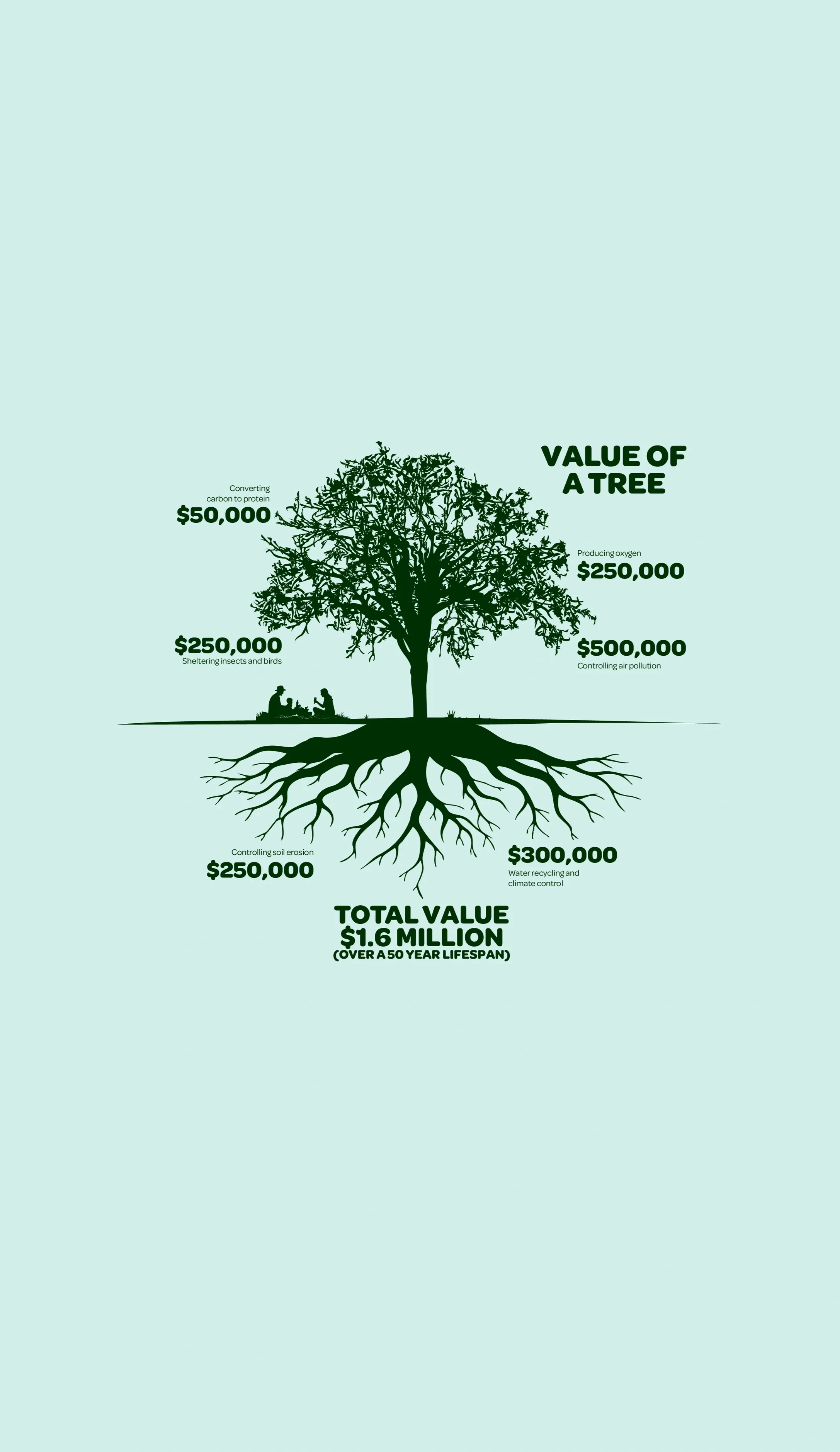
Nature provides us with much more value than we recognize on a regular basis. a tree alone can provide over $1.6 million in total value over a 50 year lifespan.
See below for more information!